
Tree Pruning & Trimming
Tree pruning starts with a reason for making a cut, not simply a request to make a tree smaller. Branches may interfere with a roof, obscure a driveway entrance or form an awkward structure while a young tree is developing. AS Arboriculture assesses the tree and the surrounding space before agreeing the work. We provide tree trimming around Peterborough from our Market Deeping base, with advice on Tree Preservation Orders and conservation areas when these affect the proposal.
Explain what you want to improve: light, access, clearance or a particular branch. Photographs can help start that conversation, but an assessment on site lets us consider species, condition and the relationship between neighbouring branches. A free written estimate records the proposed scope rather than leaving the cutting decisions undefined.
If several trees share the same boundary, identify them individually instead of requesting a single treatment for the line. A young ornamental tree, established conifer and mature broadleaf may need entirely different decisions. Numbered photographs make it easier to connect each objective to the correct specimen and avoid ambiguity when applications or estimates are prepared.
Formative pruning for young trees
Small structural decisions made while a tree is young can be more proportionate than removing substantial limbs later. Formative pruning considers competing stems, damaged shoots and branches that may conflict as the tree develops. The aim is to guide a useful framework while retaining enough foliage for growth. Not every low branch needs removing immediately, and a young tree should not be stripped into a tall bare pole. We discuss the intended mature setting, including nearby paths and buildings, before recommending which interventions are worthwhile and which branches should remain.
Deadwooding and targeted branch removal
Deadwooding removes identified dead branches rather than reducing the entire crown. The need depends partly on what sits beneath the tree: an occupied garden, entrance or parking space presents a different situation from an undisturbed habitat area. We look at accessible deadwood, damaged limbs and the surrounding living growth to define a sensible scope. A branch that appears bare is not automatically dead in every season, so diagnosis matters before removal. Where decay or structural weakness changes the risk, we explain whether ordinary pruning remains appropriate or further assessment is needed.
Clearance from roofs, buildings and sightlines
Clearance pruning should solve a particular conflict without repeatedly cutting the same tree into an unsuitable shape. We consider branches rubbing against roofs, obstructing pedestrian routes or narrowing views at an entrance. Tell us about gutters, glazing, fences and any services near the crown. Work close to electricity lines needs coordination with the relevant network operator; a general trimming request is not authority to approach live conductors. The agreed clearance should reflect the species and available space, recognising that a living tree will continue to grow after pruning.
Why topping and lopping are not our starting point
Tree lopping and tree topping are often used loosely to describe any cutting, but severe indiscriminate shortening is different from selective pruning. Large cuts can leave extensive wounds, alter structure and stimulate shoots that create further management problems. We prefer an assessed objective and suitable pruning points rather than an arbitrary height line across the crown. Cuts respect the branch attachment and avoid unnecessary stubs or flush cutting. Trees do not heal like skin: new tissue can cover wounds over time, while the tree responds internally to the injury.
Choosing a suitable season and checking permission
Timing is selected around the species, its condition and the proposed operation, not a universal month for every tree. Some tasks benefit from seeing the leafless structure; other decisions need foliage to assess the crown. Active bird nests remain protected regardless of the date. Before work on a protected tree, the relevant consent or conservation-area notice must be addressed. Our guides explain these checks and help you prepare useful information for the council. We can assist with applications and agree the cutting scope before arranging the work.
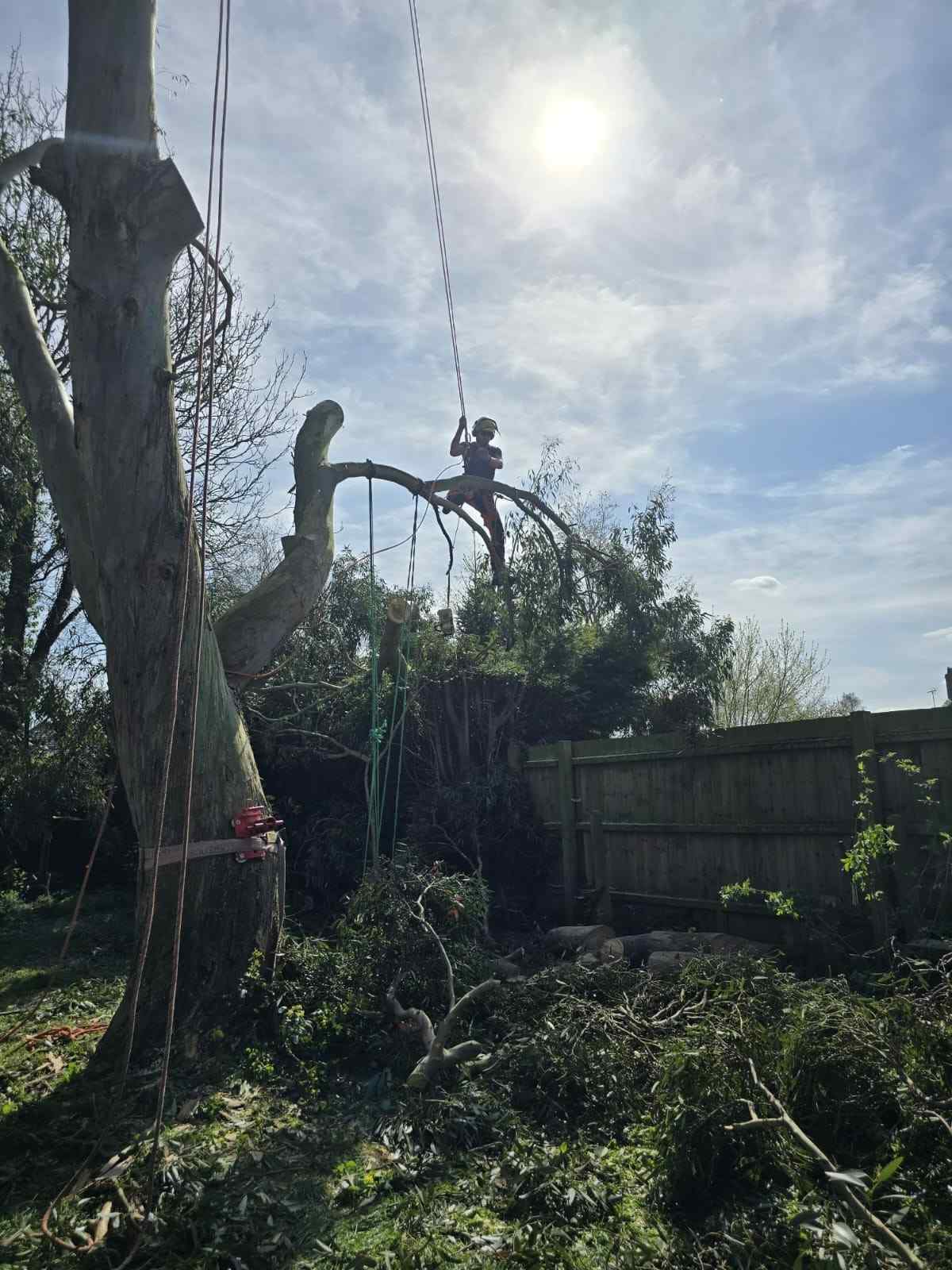
Tree Pruning: questions
Not necessarily. Lopping often describes indiscriminate shortening, whereas our pruning proposal identifies particular branches and suitable cutting points. Describe the result you need rather than asking for every limb to be cut back by the same amount.
Work may be possible, but most qualifying trees require advance notice to the council and some are also protected by a TPO. We help establish the status and the appropriate application or notice before the agreed cutting begins.
Yes, waste removal forms part of the agreed job. Timber and green waste are recycled where possible. Tell us if you want suitable material retained, so that the written estimate can describe the intended handling arrangements.
Further reading
Further reading
Related services
Commercial clients
Developers, contractors, councils and facilities managers: see how we work on commercial projects.
Commercial services →Local areas
Get a Free Site Clearance or Tree Work Quote
Tell us about the job and we'll arrange a free site visit or quote from photos or drawings. Commercial and domestic enquiries welcome.
