
Sectional Tree Dismantling
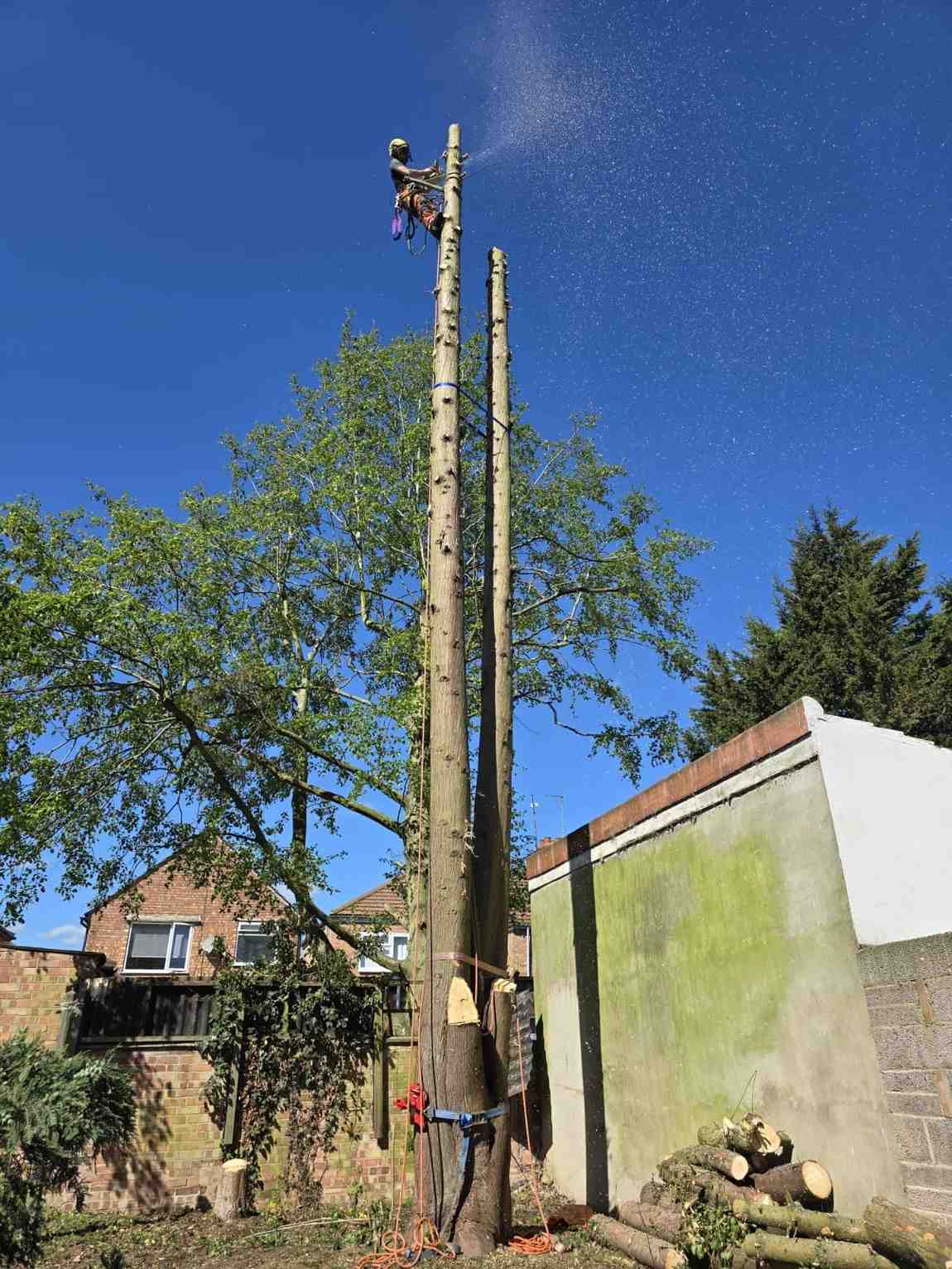
Straight felling requires an appropriate space in which the whole tree can fall. Where buildings, greenhouses, roads or neighbouring property occupy that space, removal may need to proceed in smaller controlled sections. Sectional tree dismantling separates branches and stem pieces according to a planned sequence. AS Arboriculture undertakes rigging, crane-assisted and MEWP operations where suitable, choosing the approach around the tree and its surroundings rather than describing one method as right for every confined site.
A dismantling enquiry should explain what needs protection beneath the crown and how equipment can reach the working area. The tree's condition, previous damage and available anchors are just as important as the size of the garden.
For commercial or shared sites, identify who can authorise temporary restrictions and approve the proposed handling area. A space that appears empty during a visit may be used for deliveries or pedestrian access later. Clarifying those movements helps the removal plan reflect the real working site rather than a convenient snapshot of it.
When a straight fell is not appropriate
A narrow garden or busy site may offer no clear fall area for the entire stem. Structures, retained plants, boundary fences and occupied routes can also restrict how branches are handled. We consider the full possible movement of timber rather than measure only the base of the tree. Overhead lines add another set of restrictions and require coordination with the relevant network operator; tree workers must not simply cut around live conductors. Our tree felling service explains the broader removal decision, while dismantling describes a controlled method selected when the setting or risk makes it appropriate.
Lowering sections using rigging
Rigging uses a planned arrangement of ropes and suitable equipment to manage selected pieces as they are detached. Sections may be lowered into an agreed handling area instead of dropped freely. The weight and shape of material, anchor suitability and surrounding space influence the sequence. This is not a homeowner technique or a process that can safely be reduced to a few online instructions. Deteriorated branches and stems can change whether rigging is suitable at all. We assess the structure before explaining the intended method and the areas that must remain clear during the operation.
MEWP access and crane-assisted removal
A mobile elevating work platform can provide access where the tree or location makes ordinary climbing unsuitable, subject to ground, reach and working-space requirements. Crane-assisted operations can help manage selected timber in restricted or high-risk circumstances, but lifting arrangements require detailed planning and suitable access. Neither option is automatically possible behind every narrow gate. Tell us about entrances, parking, ground surfaces and any neighbouring land that might be involved. The selected approach is reflected in the written scope; equipment use is not a claim that AS Arboriculture owns particular machines or can mobilise them without site checks.
Condition, permissions and work boundaries
Dead or dangerous trees can have brittle timber and unreliable attachments, changing how dismantling is approached. A damaged crown must be considered with the remaining stem and root support, not just the pieces visible from the street. TPO consent, conservation-area notice and any narrowly applicable exceptions need checking before removal. Active nests and other wildlife constraints can also affect timing. Commercial jobs include RAMS, with Chapter 8 traffic management where roadside work requires it. We establish working boundaries and access controls rather than assume people can continue passing beneath a controlled lowering operation.
What remains after the tree is dismantled
Removing the above-ground tree is separate from dealing with the stump, roots and future planting area. Waste handling is agreed, with timber and green waste recycled where possible; suitable retained logs can be discussed in advance. Stump grinding may require a different access assessment and should be specified separately. Explain whether you need an open lawn, a new fence line or simply safe removal of the tree. Free site visits and written estimates help define those finishing details so a carefully controlled dismantling job ends with an understood result rather than assumptions about every follow-on task.
Sectional Dismantling: questions
It is a particular removal method in which the tree is taken apart in sections. The choice depends on space, condition and surrounding risks, rather than applying to every tree that is felled.
No. Anchor condition, timber weight and site geometry can limit rigging. Some circumstances require a different access or handling method, which is assessed before the cutting plan is agreed.
No. Crane assistance is one possible approach where appropriate. Access and lifting arrangements must be assessed; many dismantling proposals use other suitable methods instead.
Further reading
Further reading
Related services
Commercial clients
Developers, contractors, councils and facilities managers: see how we work on commercial projects.
Commercial services →Local areas
Get a Free Site Clearance or Tree Work Quote
Tell us about the job and we'll arrange a free site visit or quote from photos or drawings. Commercial and domestic enquiries welcome.
