
Land Clearance
Overgrown land can hide boundaries, restrict access and make it difficult to understand what a plot contains. Land clearance creates an agreed working area by addressing scrub, brambles, self-seeded trees and other unwanted vegetation. We work with landowners, farmers, plot buyers and developers who need a practical clearance plan before the next stage. The intended use matters: reopening a paddock, exposing a survey route and preparing development land are not identical jobs.
AS Arboriculture is based in Market Deeping and undertakes commercial work nationwide. Send the location, photographs and a description of the result you need. Our free site visit helps establish the vegetation, access and constraints so that the written estimate defines what is included and what remains outside the clearance scope.
For tenanted or recently purchased land, establish who can approve the operation and provide access. Plans from a sale brochure may not show retained habitat, current fencing or utility rights. A clear instruction from the responsible landowner helps avoid starting a clearance package whose limits are still being negotiated with neighbours or other users.
Understanding the plot before cutting begins
An apparently uniform patch of brambles can conceal fencing, tipped material, ditches and uneven ground. We discuss known features and inspect accessible areas before selecting the method. Boundary ownership must be clear, especially where vegetation crosses into adjoining land. If a purchase or survey is planned, tell us which features need exposing and which must remain undisturbed. Clearance does not establish legal boundaries or replace a professional survey. A phased approach may be useful where limited access has to be opened first so the remaining ground can be properly assessed.
Scrub, paddocks and self-seeded woodland growth
Land clearing can involve brambles, dense scrub, overgrown paddocks and self-seeded stems. The treatment depends on stem size, ground conditions and the future use, rather than a promise to remove everything with one machine. Woodland clearance needs particular attention to retained trees, habitats and permissions; it should not be confused with routine mowing. We can distinguish an access ride from a larger removal area and discuss which vegetation has a continuing purpose. Retaining agreed screening or boundary growth may be preferable to clearing right up to every edge.
Mechanical mulching, flailing and stump options
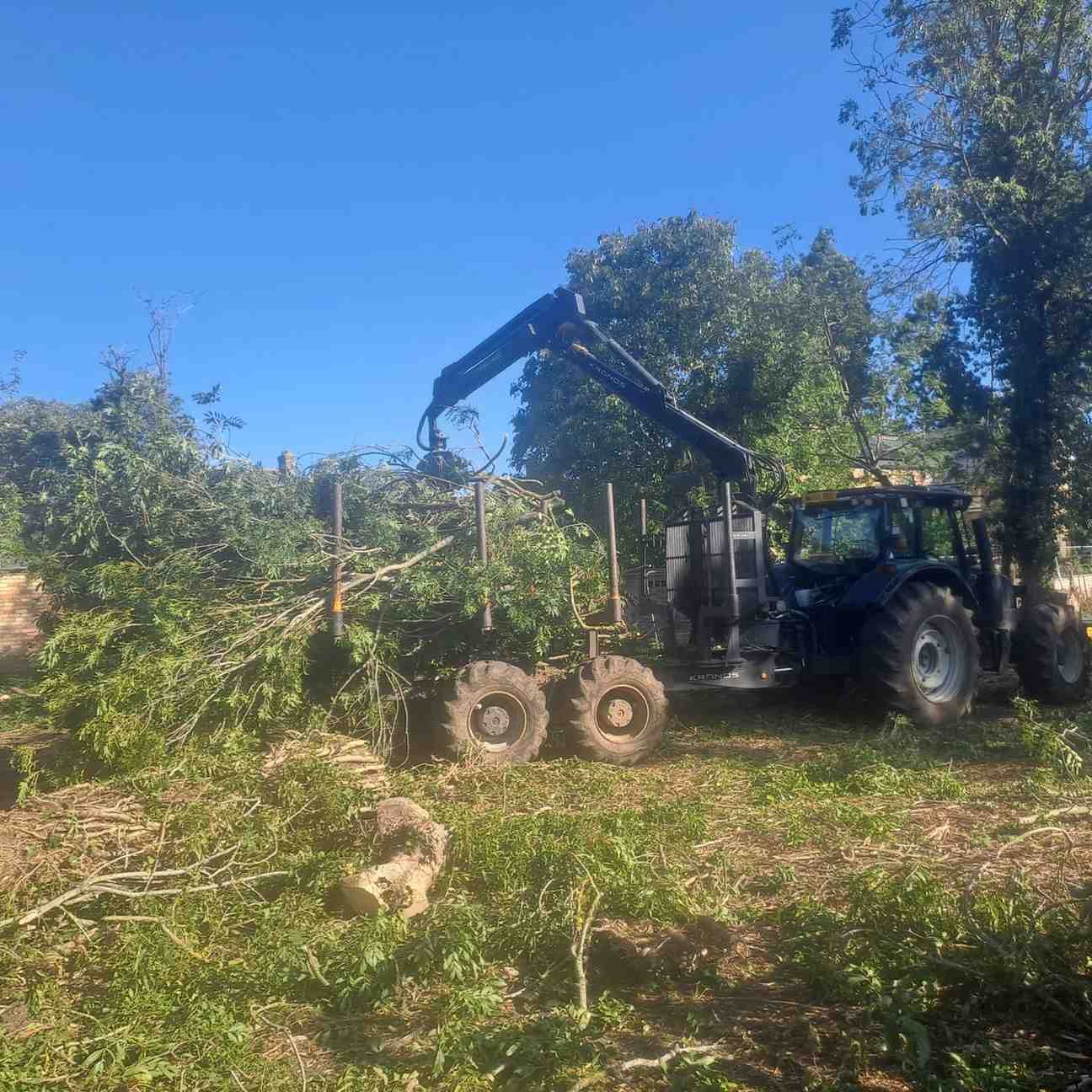
Suitable vegetation can be managed using mechanical mulching or flailing, with the choice influenced by material, terrain and access. These operations may leave processed organic material rather than a surface ready for foundations or planting. Where trees are removed, stump grinding can be included as a separate defined task. Depth, root extent and intended reinstatement should be discussed, along with known underground services. Machine access width and soft ground affect the proposal. We explain the expected finish so that a cleared plot is not mistaken for engineered formation or completed landscaping.
Ecology checks and nesting-season planning
Clearing overgrown land can affect wildlife even when the vegetation has little commercial value. Active wild bird nests are protected, and checks must reflect the actual conditions rather than a date on the calendar. Other protected-species constraints or planning conditions may require specialist surveys and advice. Work is timed to comply with nesting bird regulations. For agricultural hedgerows, separate management rules may apply as well. The linked nesting guide sets out the distinction. Do not remove habitat in advance of a survey on the assumption that later construction permission authorises clearance.
Land clearance versus construction-site preparation
Our site clearance service focuses on development and construction requirements, including defined handover conditions and coordination with other operations. Vegetation clearance addresses unwanted growth along grounds, verges and corridors. Land clearance begins with the wider plot and its intended use, which may not involve building at all. For commercial jobs we provide RAMS and discuss working boundaries, access and material handling. Waste is removed to the agreed scope, with timber and green waste recycled where possible. Unknown or suspected hazardous waste requires appropriate separate assessment, not routine chipping or mulching.
Land Clearance: questions
Yes, the scope can retain identified trees, hedges and other features. Marking agreed boundaries and discussing future use helps determine which areas are cut and which remain. Permissions and ecology restrictions still need consideration before machinery starts.
Not by itself. Vegetation removal is different from foundations, ground investigation, contamination testing or engineered preparation. We define the clearance finish and any separately agreed tasks so that surveyors or construction teams understand the condition being handed over.
We can assess selective access or visibility clearance for a survey brief. Explain the routes and features the surveyor needs to inspect, and any limits on disturbance. Ownership, tree protection and wildlife constraints must still be resolved appropriately.
Further reading
Further reading
Commercial clients
Developers, contractors, councils and facilities managers: see how we work on commercial projects.
Commercial services →Local areas
Get a Free Site Clearance or Tree Work Quote
Tell us about the job and we'll arrange a free site visit or quote from photos or drawings. Commercial and domestic enquiries welcome.
