24/7 Emergency Tree Services
A hanging limb, cracked stem or displaced root plate can change without warning. Do not approach the tree to take a close photograph or try to remove material yourself. Keep others away from the area that the tree or branch could reach. AS Arboriculture provides 24/7 emergency tree call-outs; contact Alex or Michelle and explain the location and visible problem from a safe position. Attendance and the appropriate response depend on the circumstances, access and hazards present.
Roads, cables and occupied buildings
A fallen tree affecting a public highway or electrical equipment involves more than cutting timber. If power lines are involved, stay well clear and contact the network operator. Immediate danger to life should be reported to the emergency services. Describe whether the tree obstructs the only access to a property and whether people remain inside an affected building. Roadside tree operations use Chapter 8 traffic management, and the responsible authority may need to establish controls before work can proceed.
Assessing a damaged tree for removal
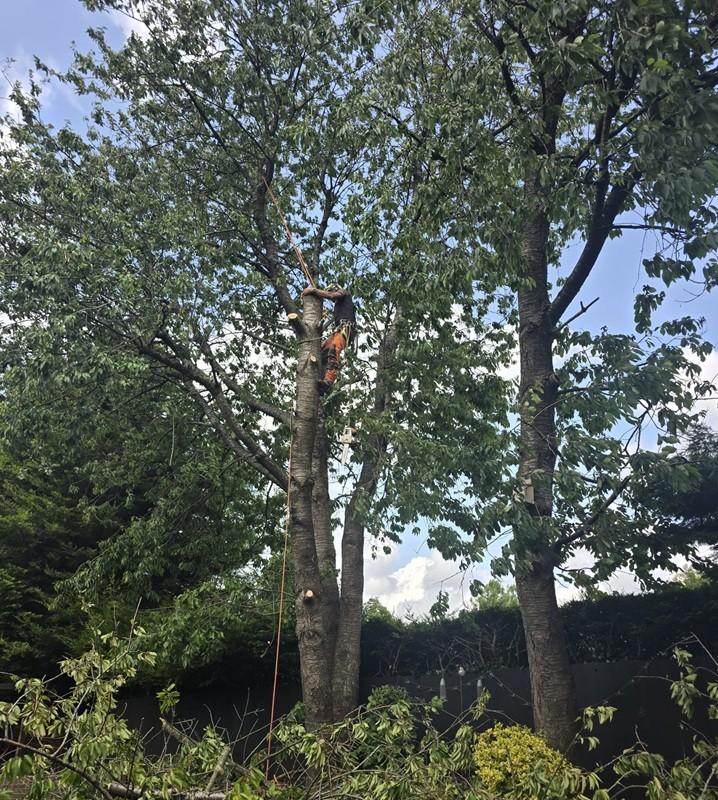
The safest method depends on the remaining structure, loading and surroundings. Damaged branches may be supporting other material, and a stem under tension can behave differently from an undamaged standing tree. Sectional dismantling, rigging, crane assistance or MEWP access may be appropriate following assessment. Do not assume straight felling is suitable merely because open ground is nearby. The working zone and handling method are agreed against the hazard, with commercial RAMS where the operation is a commercial job.
Follow-up work once the hazard is assessed
Emergency attention and the final restoration of the area are distinct matters. Remaining tree sections, timber removal, stump grinding and replacement fencing may need a separate scope after the urgent situation has been reviewed. Protected-tree and wildlife requirements still need consideration; an emergency description does not remove every legal restriction. We can help discuss TPO and conservation-area requirements. Waste is removed as agreed, with timber and green waste recycled where possible. Keep photographs only when they can be taken without entering the hazard area.
Give a useful report without entering the danger zone
When calling about storm damage, describe what you can see from a protected position: a limb suspended in another tree, a trunk across an entrance or soil lifted beside the roots. Give the exact address and explain how someone approaching the property would find the affected area. Say whether the obstruction is on private land or appears to extend onto a public route. Do not walk around the tree to improve the description. A brief, accurate account is preferable to a close photograph obtained by stepping beneath unstable material.
Keep children, pets and other visitors away, and tell anyone arriving at the property about the hazard before they approach. Avoid attaching ropes, leaning ladders against the tree or attempting to cut a branch that is holding other material. A tree resting on a fence or roof may move when its support changes. If the situation involves electricity, the network operator needs to deal with that interface; tree clearance cannot be treated as a substitute for making electrical equipment safe. Report immediate danger to people through the emergency services.
Separate urgent tree work from recovery of the property
Once an assessment can take place, identify the urgent objective rather than requesting an undefined complete tidy-up. Reopening a blocked route, addressing a suspended limb and dealing with a damaged standing tree are different tasks. The proposed operation should explain which part is being tackled and what must remain inaccessible. Protection rules still matter, including the evidence needed if work is justified by danger. Do not assume that describing a tree as an emergency authorises unrelated pruning of its remaining healthy branches or removal of neighbouring protected trees.
Later decisions may concern timber left on the ground, a remaining stump or a damaged boundary. These should be separated from the immediate hazard work and from repairs undertaken by other specialists. Where safe, retain an account of the visible damage and the work agreed, rather than repeatedly entering the affected area for photographs. Our fallen-tree removal page and property-damage guide explain the next questions about clearance and records. Dangerous tree removal and sectional dismantling provide further detail when a standing remnant needs a planned operation after the urgent situation has been assessed.
Frequently asked questions
Keep people away from damaged trees and do not attempt to cut hanging branches. Contact Alex or Michelle on the emergency tree line; attendance depends on the situation and safe access.
Further reading
Related services
Commercial clients
Developers, contractors, councils and facilities managers: see how we work on commercial projects.
Commercial services →Local areas
Get a Free Site Clearance or Tree Work Quote
Tell us about the job and we'll arrange a free site visit or quote from photos or drawings. Commercial and domestic enquiries welcome.