
Forestry Mulching & Mechanical Scrub Clearance
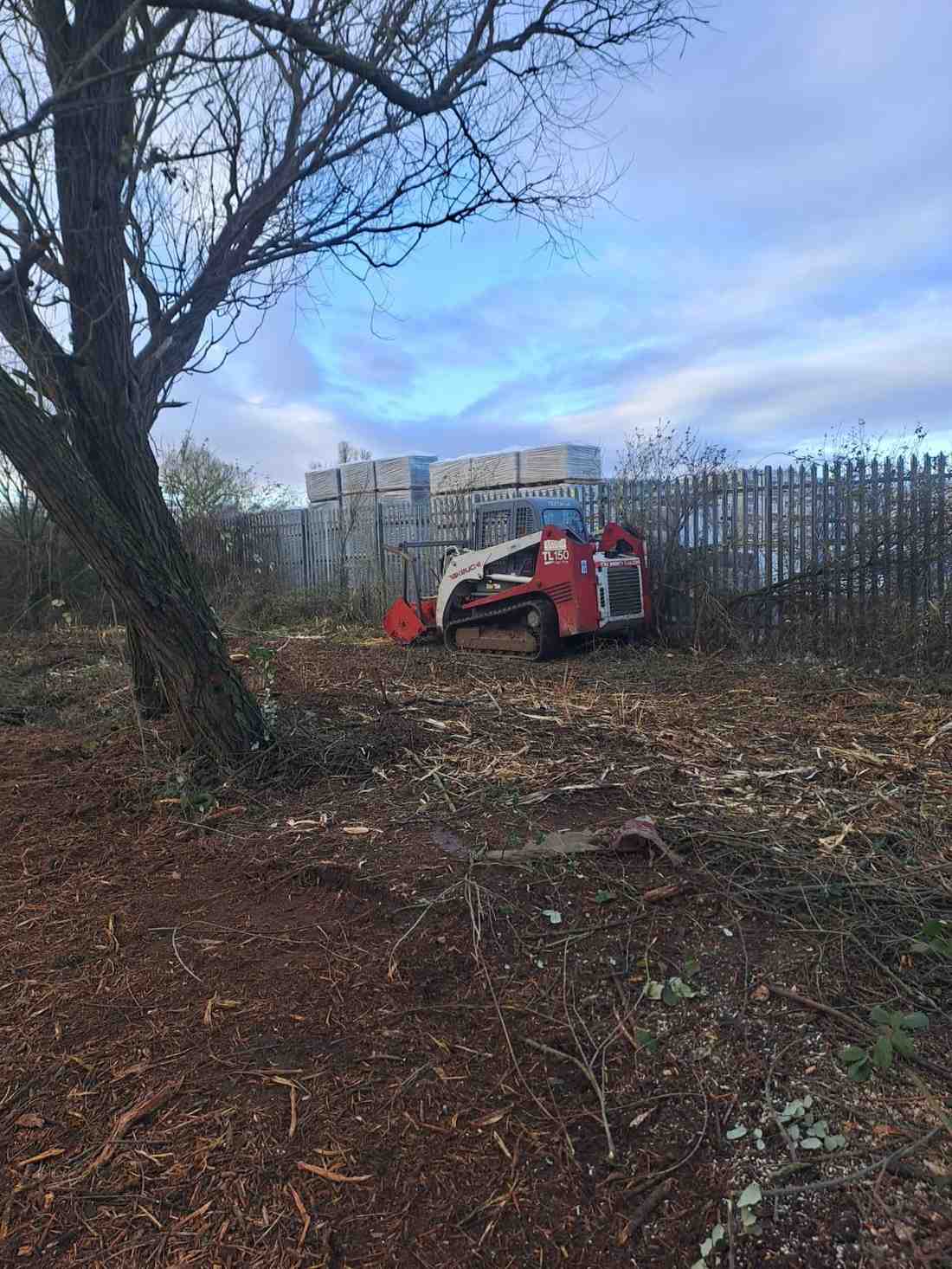
Forestry mulching processes suitable scrub and smaller woody growth in place, breaking it down into a layer of organic material. It can open an overgrown area without treating every stem as a separate tree-felling job. AS Arboriculture provides brush cutting, flailing and mechanical mulching as part of clearance work, with the approach chosen around the vegetation and the land. We do not specify a machine model before assessing the conditions.
The important question is what the ground needs to be used for afterwards. A mulch-covered plot is not automatically prepared for construction or finished landscaping. Send the location, photographs and intended use so the proposed method and handover condition can be discussed together.
A pre-start plan can separate areas for mulch retention from routes that must remain passable during the project. Include inspection covers, gate positions and land used by others. These details help align the cutting sequence with the owner's next activity rather than leave a technically cleared area that still prevents the intended inspection or access.
What happens to scrub under a mulcher
A mechanical mulcher breaks suitable vegetation into smaller material as it works through the agreed area. The result can remain on the ground as mulch rather than being loaded and removed as whole stems. Stem size, density, terrain and hidden obstacles affect whether this is practical. Fencing wire, dumped metal and stones require particular attention because they are not ordinary vegetation. We assess accessible areas and ask about known obstructions before selecting a method. Mulching above-ground growth also differs from grinding individual stumps to a specified depth; the finishing requirements must be described separately.
Overgrown plots and pre-survey access
A landowner may need visibility for a survey rather than complete clearance of an entire holding. Selective mulching can be considered for access routes or agreed inspection areas while retaining screening and identified habitat. Mark the boundaries, retained trees and features that must not be disturbed. Pre-survey cutting does not replace ecological checks or permission requirements, and it cannot establish a legal property boundary. Our land clearance page considers the wider plot; vegetation clearance is useful for defined corridors. The survey brief should determine what is opened, not a default instruction to clear everything.
Access routes, firebreaks and ground conditions
Scrub management may support an agreed access route or firebreak, but the width, location and maintained condition need a site-specific plan. Creating a strip of mulch is not a promise of fire protection or an engineered road. Wet ground, steep slopes, buried services and retained roots can restrict machine operations. We discuss the intended use and any relevant land-management advice before agreeing the work. The surface may remain uneven and organic material may settle over time. If a vehicle route requires a particular bearing capacity or finish, that is a different specification from cutting back growth.
Where another clearance method is better
Large trees can require assessed felling or sectional dismantling rather than routine mechanical scrub treatment. Sensitive habitats, protected species and retained trees may limit where machinery can operate or require specialist advice before any cutting. Some sites need material removed rather than left in place; others contain waste that cannot safely enter a mulching operation. Flailing and brush cutting may suit different vegetation or maintenance objectives. We compare the methods around the desired outcome instead of suggesting mulching is always the quickest or least disruptive choice, especially where the full site is not yet visible.
RAMS, material handling and the next stage
Commercial clearance is planned with RAMS, agreed working limits and attention to people or operations nearby. Active nests are protected regardless of the season, and tree protection or felling licence checks may also apply. Material handling is specified: retained mulch is different from off-site removal, while suitable waste is chipped and recycled where possible. If development preparation is the objective, our site clearance service covers the broader handover requirements. Free site visits and written estimates allow access, vegetation and the expected finish to be understood before the programme is set, with limitations and exclusions stated rather than implied.
Forestry Mulching: questions
No. Processing scrub at the surface is not the same as full root extraction or individual stump grinding. Specify the intended ground use so any additional stump operation can be assessed.
Not necessarily. Hidden waste, steep or soft ground, retained roots and wildlife constraints can make another method preferable or prevent work until checks are complete.
No. A processed vegetation surface does not establish structural suitability, drainage or ground condition. Development requirements need a separate construction and site preparation specification.
Further reading
Further reading
Related services
Commercial clients
Developers, contractors, councils and facilities managers: see how we work on commercial projects.
Commercial services →Local areas
Get a Free Site Clearance or Tree Work Quote
Tell us about the job and we'll arrange a free site visit or quote from photos or drawings. Commercial and domestic enquiries welcome.
