Highways & Groundworks Services
Highways and groundworks projects need a clear understanding of the site before operations start. Vehicle movements, pedestrian access and neighbouring activities can affect the working area. AS Arboriculture works for councils, NHS trusts, supermarkets, developers and commercial clients without identifying individual customers here. Explain the intended operation and provide any existing drawings or site requirements. The scope should describe what is being undertaken, which areas remain available and what information needs confirming before work begins.
Teams, supervisors and RAMS
CSCS-registered teams support the work, with CSCS/NPORS/SSSTS-qualified supervisors on groundworks. Risk assessments and method statements are prepared for every commercial job. These documents should reflect the actual activity and surroundings rather than an unrelated generic task. Site rules, access restrictions and known services need communicating during planning. We hold £5 million public liability insurance. Qualifications and insurance do not replace a suitable specification or the information needed to understand concealed hazards.
Roadside controls and coordination
Roadside operations use Chapter 8 traffic management. Discuss interfaces with the highway, pedestrian routes and deliveries before dates are agreed. A commercial site may remain occupied throughout a project, so the method must account for the people and vehicles nearby. Any permissions or asset-owner requirements should be identified in advance. Plant access, unloading and material movements form part of that discussion. We remain partnered with Highways UK; equipment and specialist arrangements are considered against the work rather than presented as an owned fleet.
Linking clearance with the next operation
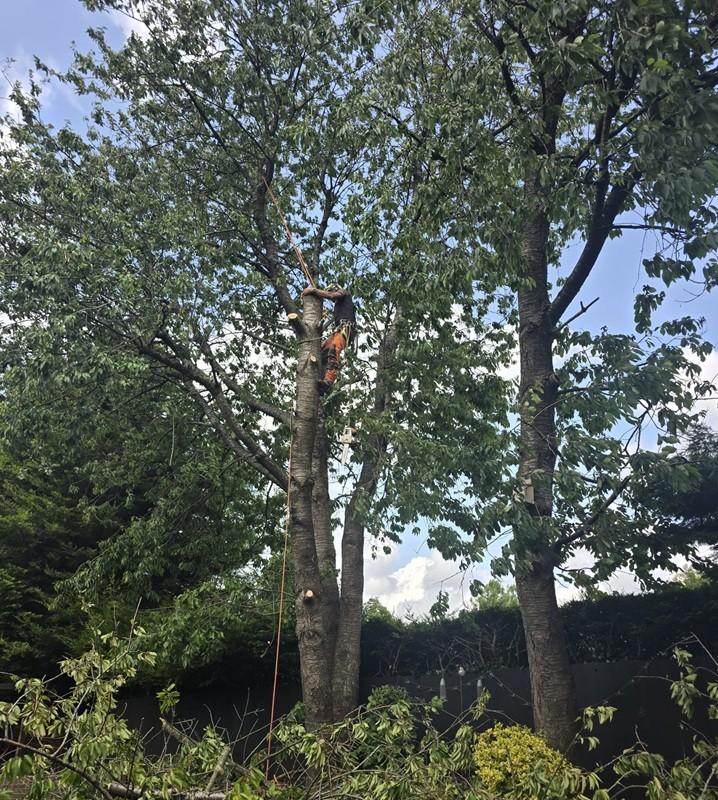
Vegetation and tree clearance may need completing before a groundworks area can be inspected or used. Agree the limits of clearance, retained trees and handling of waste so that the next task has the intended starting conditions. Stump grinding, root management and initial landscaping are separate operations with different finishes. Ask for a written estimate describing the agreed package and any exclusions. Preparation for construction should follow the relevant project specification; a cleared photograph does not demonstrate that ground is suitable for foundations or engineered surfaces.
Define the handover point between clearance and groundworks
A project brief should state what the next stage needs to find, not simply ask for the land to be cleared. Is vegetation preventing inspection, are stumps obstructing an agreed working area, or does a retained boundary need exposing? Mark the limits on a drawing and distinguish vegetation to remove from trees or features to protect. Removing visible growth is not proof that the underlying ground meets an engineering specification. Foundations, drainage and constructed surfaces have their own requirements, which should come from the responsible project professionals.
List operations separately where more than one is requested. Tree removal, stump treatment, handling arisings and subsequent landscaping do not produce interchangeable finishes. An instruction to grind a stump is not automatically an instruction to excavate its entire root system. Set out any exclusions and clarify who will assess the area before the following contractor proceeds. Our site-clearance and vegetation-clearance pages describe that earlier stage; highway vegetation clearance addresses the roadside setting. Using the relevant scope prevents a broad groundworks description from concealing unresolved assumptions about the finished land.
Share the site information that affects material movements
Provide available utility drawings and identify uncertainty about their accuracy. The position of a visible inspection cover alone does not establish the route of every buried service. Explain where vehicles can enter, turn and unload, and whether that space is also used for deliveries or public access. Mention any gates that must stay available and routes used by neighbouring occupiers. These details help define the interface between the work area and the rest of the premises, rather than leaving movement arrangements to be inferred from a site photograph.
Before dates are discussed, identify who can authorise access and who holds the relevant highway or asset-owner information. Roadside vegetation work may require coordination beyond the landowner’s instructions, even where the task appears small. Site-specific RAMS need to reflect those interfaces and the agreed operation. Keep the handover responsibilities visible in the written estimate: where materials go, which areas remain restricted and what requires a separate instruction. Our Highways UK partnership remains part of the service context, but neither that relationship nor a qualification removes the need to establish the actual project requirements.
Frequently asked questions
Yes. We regularly work on live roads, footpaths and car parks, with traffic management planned to keep people safe and disruption low.
Further reading
Related services
Commercial clients
Developers, contractors, councils and facilities managers: see how we work on commercial projects.
Commercial services →Local areas
Get a Free Site Clearance or Tree Work Quote
Tell us about the job and we'll arrange a free site visit or quote from photos or drawings. Commercial and domestic enquiries welcome.